
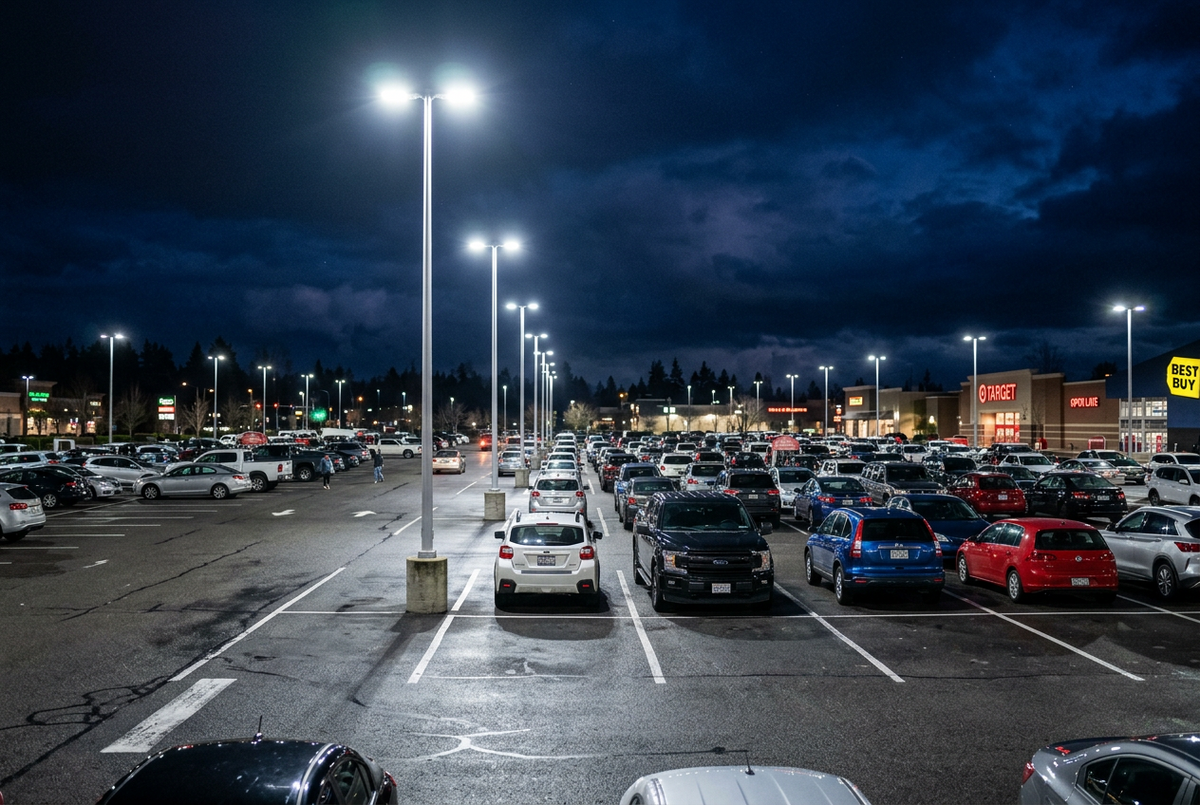
Pole lights for parking lot projects are usually bought once and expected to perform for a decade or more, which makes the spec sheet more important than the sticker on a single fixture. A 2026 purchase comes down to four moving parts: fixture output, pole height and material, controls, and the savings paperwork that follows the install. Get those aligned and the project moves quickly. Miss one and you end up with uneven coverage, mismatched hardware, or a rebate claim that stalls before it ever reaches the utility.
This guide walks through the numbers that actually drive the decision, plus the Maryland-specific angles property managers and contractors tend to ask about first.
Start With Lumens, Then Work Back to Wattage
Lumens describe the light that leaves the fixture. Watts describe what the fixture draws from the panel. Buyers who shop by wattage alone often end up over-lighting a small lot or under-lighting a large one, because two fixtures drawing the same power can put very different amounts of light on the pavement.
Published product guidance puts most commercial parking lot fixtures between 15,000 and 30,000 lumens per light. Output of 40,000 lumens and above is generally reserved for tall poles and large open lots where the fixture has to throw light across a long distance. Across the LED pole light market, models commonly range from 100W to 300W and deliver roughly 12,000 to 42,000 lumens, so a buyer has room to dial in the right point on that curve.
| Lighting Range | What it typically covers |
| 15,000 to 30,000 lumens | Where most commercial parking lot fixtures fall |
|
40,000 lumens and above |
Reserved for tall poles and large open lots |
| 100W to 300W | Common model range across LED pole light lines |
| 12,000 to 42,000 lumens | Full spread of output across those wattages |
Lumen count is only half the story. Optics, mounting height, and pole spacing determine whether that output lands on the pavement or spills onto a neighboring property. For anything beyond a small lot, ask for a photometric layout before you commit to a fixture count, and confirm the target light levels with your local code official rather than assuming a national average applies.
Pole Height and Material Decide How the Lot Reads at Night
A 20 ft light pole is a commercial outdoor lighting pole built to hold parking lot fixtures approximately 20 feet above its mounting surface. Height drives uniformity. Put a high-output fixture on a short pole and you get a bright pool at the base with darkness between poles. Put a modest fixture on a tall pole and the light spreads thin.
Material choice has shifted with LED adoption. Aluminum poles are a strong fit for LED retrofits because LED fixtures are lighter and have smaller profiles than the older shoebox housings they replace. A smaller, lighter fixture lowers the effective projected area, or EPA value, which is the wind-load number engineers use when sizing a pole. That reduced load is why aluminum handles many LED applications well.
Poles are sold in both square and round profiles, and LED-ready poles are available as standalone units or bundled with fixtures. Buying a pole separately from the fixture means you also need the right mounting hardware. Round pole adaptors, including 4 inch round pole adaptors supplied with a gasket, exist specifically to mate a fixture to a round pole cleanly. Bronze is a common finish across poles and fixtures, which helps a mixed order look consistent on site.
Match the Fixture Style to What Happens Underneath It
Parking lots are not uniform. The row where cars park, the drive aisle, the entrance canopy, and the sidewalk to the front door each put different demands on a fixture. A single style rarely covers all of them well.
- Shoebox area lights are the workhorse for open parking rows and drive aisles, where the goal is broad, even coverage from a pole.
- Post top and acorn lanterns suit pedestrian zones, entrances, and landscaped islands where appearance matters alongside light output.
- Canopy lights handle covered walkways, fuel canopies, and drop-off areas where a pole will not fit.
- Wall packs cover building perimeters, service doors, and loading areas that fall outside the pole layout.
- Flood lights are useful for aiming light at a specific zone rather than spreading it across a whole lot.
Specifying more than one style is normal. The important thing is that the fixtures share a color temperature and finish so the property looks intentional rather than pieced together over several budget cycles.
Kits or Components: Two Ways to Buy the Same Project
Suppliers sell parking lot lighting in two formats. Complete pole kits and packages bundle the pole, fixture, and mounting hardware so everything arrives together and ships directly to the job site. Component buying lets you purchase poles, fixtures, and accessories separately, which is the better path when an existing pole is sound and only the head needs replacing.
Kits reduce the risk of a missing bracket or a mismatched tenon on install day, and they simplify the purchase order for a contractor running several sites. Component buying keeps more of the existing infrastructure in service and can trim waste on a partial retrofit. Either way, confirm what is actually in the box before the crew mobilizes, since pole accessories are frequently sold as separate line items.
Controls: Dusk-to-Dawn Sensors and Dimming
Outdoor pole lights are often offered with dusk-to-dawn sensors that switch the fixture on at sunset and off at sunrise without anyone touching a timer. That matters for a Maryland property where the person responsible for the lot may not be on site every evening, and it removes a common source of wasted energy when lights stay on past dawn.
Look for fixtures rated for wet locations, since outdoor pole lights face rain, snow, and freeze-thaw cycles year after year. If the property has stepped dimming or a lighting schedule, confirm the fixture supports 0-10V dimming before ordering. Adding a photocell or dimming capability later usually costs more than specifying it up front, and it can complicate a rebate application that assumed the controls were part of the original install.
Rebates, Warranty, and Local Support in Maryland
Energy efficiency programs can change the math on a parking lot retrofit, but the savings only land if the equipment and paperwork line up. Greenervolts is a Maryland-based supplier in Frederick and a preferred member of five Maryland utilities, and it passes MD EmPOWER rebate savings directly to customers rather than pushing the customer through a separate claim process. If your project is in the state, ask what documentation the utility needs before the fixtures ship so the incentive is not left on the table.
Warranty terms deserve the same scrutiny as lumens. A 5-year no-questions-asked warranty on pole lights and fixtures removes a real risk for a property manager who has to explain a mid-winter failure to an owner. Compare that coverage against the standard terms on any competing quote, and check whether the warranty covers the driver and the housing or just the LEDs.
A Practical Selection Checklist
- Measure the lot and note pole locations, existing heights, and the condition of any pole you plan to reuse.
- Set a target light level with your code official or a lighting professional before picking fixtures.
Choose lumen output from the published range, then confirm the wattage fits the circuit and panel capacity. - Decide between square and round poles and confirm the mounting hardware, including any round pole adaptor and gasket.
- Check the EPA and wind load on any pole carrying a new fixture, especially on an older installation.
- Select controls: photocell, dimming, or both.
- Confirm what ships in each kit versus what is sold separately.
- Ask about rebate eligibility and required documentation before placing the order.
- Read the warranty in full, including exclusions.
Frequently Asked Questions
How many lumens do I need per parking lot pole light?
Most commercial parking lot fixtures fall between 15,000 and 30,000 lumens per light. Output of 40,000 lumens and above is generally reserved for tall poles and large open lots where light must travel farther. Available models commonly run from 100W to 300W and deliver roughly 12,000 to 42,000 lumens, so match the fixture to pole height, spacing, and the light level your local code requires.
What height should a parking lot light pole be?
A 20 ft light pole supports parking lot fixtures approximately 20 feet above the mounting surface. Height affects uniformity as much as brightness does, so a taller pole with a well matched fixture usually covers a lot more evenly than a short pole with a very high output head. Confirm the height against your site plan and local requirements before ordering.
Can I replace just the fixture and keep my existing pole?
Often yes, provided the pole is structurally sound and the mounting pattern matches. LED fixtures are lighter with smaller profiles than older shoebox housings, which lowers the effective projected area and the wind load the pole carries. Check the pole condition and confirm the tenon or adaptor size, including whether a round pole adaptor and gasket are needed.
Do I need a photocell on parking lot pole lights?
A dusk-to-dawn sensor switches fixtures on at sunset and off at sunrise without manual intervention, which prevents lights from burning all day after someone forgets a timer. Many outdoor pole lights are offered with these sensors built in. If your property runs a fixed lighting schedule instead, confirm the fixture supports 0-10V dimming before you buy.
How do Maryland rebates work for parking lot lighting?
Maryland efficiency incentives tied to the MD EmPOWER program can reduce the cost of qualifying LED equipment. Greenervolts is a Maryland-based supplier and a preferred member of five Maryland utilities, and it passes rebate savings directly to customers. Program rules and eligible equipment lists change, so confirm current terms with your utility and the supplier before the order is placed.
Share:
Parking Lot Pole Lighting That Cuts Utility Bills
LED High Bay Light for Warehouse Spaces